

Part 2: Black and Grizzly Bear Cub Rehabilitation, and Measuring Success

By Contributor
By Sue Wrigley and Kathy Moore
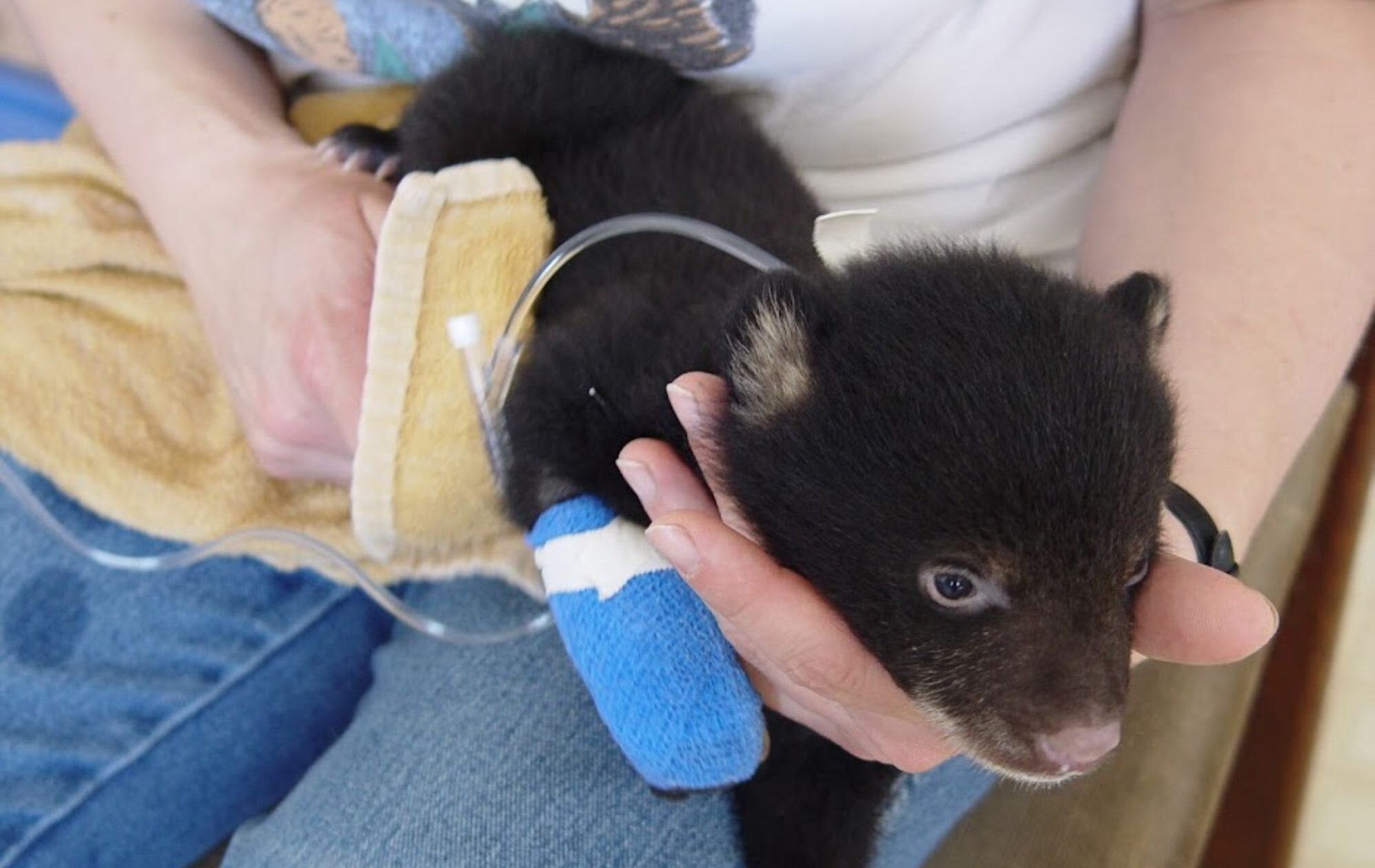
People often ask, why should we help black bears, when they aren’t endangered? Think about it: Human impact on our wildlife species is growing at an alarming rate and what is common today can easily be endangered or gone tomorrow. Re-wilding bears offers unique study opportunities. We have much to learn and the work Northern Lights Wildlife Society (NLWS) does with black bears can greatly aid in the protection and recovery of endangered bear species around the world. NLWS shares their work as widely as possible; they work with universities and other organizations to answer important questions about bears.
NLWS has been operating since 1989 rescuing various species of wildlife. Since 1991 have had over 904 orphaned bear cubs have come through their doors, with 40 of those being Grizzlies. 90.7% of them have been, or will be, released back into the wild when they were old enough and healthy enough. The 9.3% that were not released were due to health issues that were too insurmountable for the little cubs, and they either died or had to be euthanized. NLWS does not provide a long-term sanctuary for bears – their primary purpose is to rewild the orphaned cubs.
The number of orphaned bear cubs taken in varies from year to year. At NLWS the normal was once about 25-35 cubs per year. Then in 2021 it started to really fluctuate. In 2021 there were 81 (including 5 Grizzlies), in 2022 – 40 (including 2 Grizzlies), followed by 2023 when there were an astounding 140 orphaned cubs (all Black Bears). In 2024 the number dropped down to 28 Black Bears and 4 Grizzlies. 2025 is once again looking like a bad year; NLWS already has 25 Black Bear cubs which is double the usual number for this time of year.
The cycle of numbers from year to year can probably be explained by: In a year when a lot of cubs are orphaned, it is indicative of bad conditions for bears (such as wildfires and drought) which as well as orphaning cubs, causes birth rates to go down in sows such that there are fewer cubs born the next year. We discussed the unique reproductive system in bears in a previous article and how food is the number one controller of bear populations. We also discussed the reasons for bear cubs becoming orphaned in the last article.
In 2024, a study to evaluate the success of Black Bear rewilding was initiated by NLWS in conjunction with the University of Victoria. An MSc student from UVic took on the project. 40 of the Black Bears were collared and tracked when they were released in 2024. (Collars are expensive, so it wasn’t possible to collar all of the released bears.) 24 Black Bears have been collared and are being tracked in 2025. Tracking gives them data on survival rates as well as whether released cubs come into conflict with humans. NLWS will share the results once the research project has enough data, but so far it looks like the cubs are doing at least as well as a wild cub does in its 2nd year.
What about Grizzly Bear cubs? NLWS is the only place in N. America that has a Grizzly re-wilding program. NLWS and the BC government started a re-wilding project for orphaned Grizzlies in 2007. The number of Grizzlies in BC is far lower than the number of Black Bears, so it is a slow project, but a lot has been discovered over the last 18 years. The BC government regulates that all Grizzly cubs must be collared and tracked when released. After working with various partners, in 2023 NLWS decided to take over the post-release monitoring by hiring their own researchers to ensure that the work was conducted keeping the best practices for animals in mind.
While issues of raising the bears in human care have mostly been solved by minimizing any contact, choosing good release sites and monitoring survival rates remains a work in progress. Grizzlies are released way out in the wilderness, which requires helicopter access. This has involved a lot of work finding the best ways to transport the bears to the release site. The aim of this project is to create best practices that can aid organizations and jurisdictions all over the world in creating similar programs.
There is a great episode called “Grizzly Rewild” in Season 62 of David Suzuki’s “The Nature of Things” which shows a season of NLWS’s rewilding program.
FAQ
Q: Radio collars for tracking look big and uncomfortable. Does it cause the bears discomfort?
A: If the collar was uncomfortable, the bears could get it off easily. Very few bears ever try to get one off.
Q: What happens when the bear grows too big for the collar?
A: The collars are designed to drop off after a year.
Q: Does tranquilizing harm a cub?
A: If the cubs are darted, they remain unconscious for several hours, prior to waking up quite thirsty. While they are unconscious, they are monitored closely to ensure they do not suffocate in transit. Long-term effects are rare.
Q: Do siblings stay together when they are released?
A: From some intermittent collaring and tracking in the past, it seems that it is rare that siblings stay together. The current research project should shed more light on this.
Q: When are cubs released?
A: At about 17 months old, which is when a mother in the wild will kick their cubs out so that she can mate again. This is therefore a natural time for cubs to learn to be on their own.
Q How can I find out more and donate?
A: https://www.wildlifeshelter.com or the Northern Lights Wildlife Society FB page. Wildlife rehabilitation is regulated by the government but receives no government funding … donations are always appreciated. You can also see photos of the cubs recently rescued in our area: Shirley, Temple, Gimlet, Mai Tai, and Pina Colada.





















Comments